
Buy Pre-Owned DJI Drone Gear With Confidence
Published
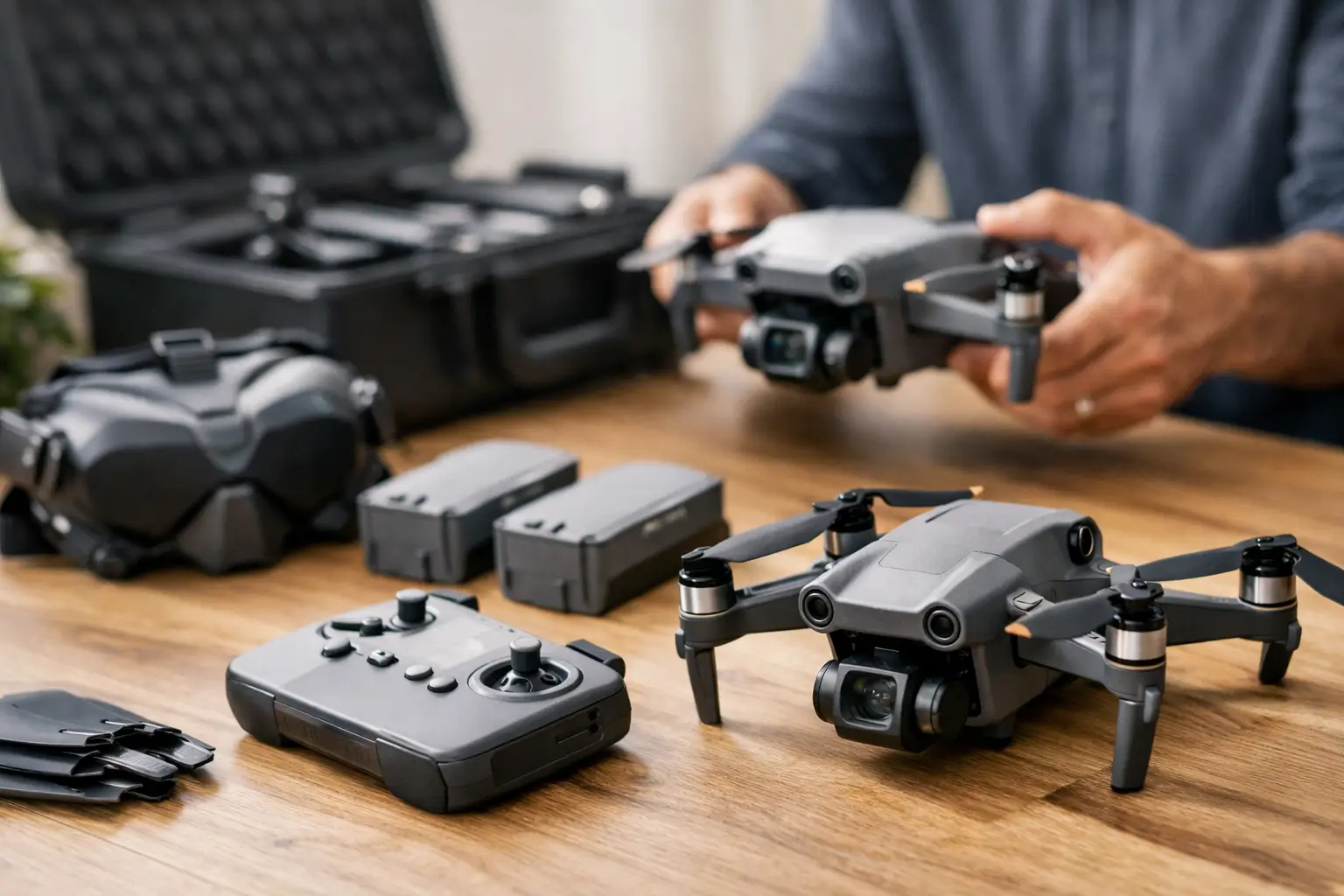
Ready to buy pre-owned DJI drone equipment? Learn how to check condition, flight history, batteries, account status and support before purchase in the UK.
A pre-owned aircraft can be the sensible route to better camera capability, a more capable flying platform or a cost-effective replacement for a damaged drone. But when you buy pre-owned DJI drone equipment, the saving only represents value if the aircraft, battery system and account status have all been properly checked.
The difference between a good purchase and an expensive problem is rarely cosmetic. A few propeller marks may be harmless; impact damage, degraded batteries or an aircraft still linked to a previous owner can make a drone far less useful. Buy from a specialist that understands the equipment, then assess the package as a working system rather than judging it from photographs alone.
Why pre-owned DJI equipment makes sense
DJI aircraft are built around an ecosystem. The drone, controller, batteries, charging equipment, camera, app connection and accessories all affect the ownership experience. Buying pre-owned can put a higher-tier model or a fuller flying kit within reach, particularly for a creator upgrading from a basic setup or a working pilot needing a second aircraft.
It can also be the practical answer when you already own compatible accessories. A replacement airframe or additional aircraft may allow you to retain batteries, cases and controllers you know well, provided compatibility is confirmed before purchase.
There is a trade-off. A new drone gives you a known starting point, current manufacturer terms and no previous use history. A pre-owned unit should earn its place by being accurately described, appropriately tested and backed by clear support. If the price difference is small, new equipment may be the stronger long-term decision. If the condition and provenance are right, pre-owned can be excellent value.
What to check before you buy a pre-owned DJI drone
Start with the aircraft's overall condition, but do not stop there. Look closely at the arms, motor mounts, landing points and propeller fittings. Scratches on a body shell are common from normal handling. Cracks, distorted plastics, loose components or signs of a heavy impact deserve proper investigation.
The gimbal and camera need equal attention. With the aircraft powered on, the gimbal should initialise smoothly and hold the camera level. Check the lens and any fitted filters for scratches, chips or residue. A camera problem can be more consequential than a marked airframe, particularly if you rely on clean footage for client work or content production.
Batteries are not a minor accessory
A drone battery is a safety-critical consumable, not simply an extra item in the box. Ask about the number of batteries included, their age, charging behaviour and any visible swelling or case damage. Battery contacts should be clean and secure, while the battery should lock firmly into the aircraft.
Where battery information can be viewed through the relevant DJI app or controller, check it. A used battery may still perform well, but it should be judged on its condition and history rather than assumed to be equivalent to a new one. For regular commercial work, it is often sensible to budget for additional batteries or replacements as part of the purchase decision.
Confirm controller, charging and accessory compatibility
Not every DJI controller, charger or accessory works across every generation of aircraft. Confirm that the supplied controller is the correct model for the drone and that the charging equipment is included and functional. A missing cable is easy to replace; a mismatched controller changes the value of the package entirely.
Also check what is genuinely included. A fly-more-style bundle, carrying case, spare propellers and memory cards can be useful, but only if they are in serviceable condition and appropriate for the aircraft. Do not let a pile of minor accessories distract from the condition of the drone itself.
Check account and activation status
Account status is one of the most important pre-owned checks. Some DJI products may need to be removed or unbound from the previous owner's account before the new owner can use them normally. Confirm this has been handled, where applicable, before completing the purchase.
Keep proof of purchase and the product serial number with your own records. This supports future servicing, insurance conversations and any resale or trade-in decision. It also gives you a clearer ownership trail than an informal private transaction with limited documentation.
A practical inspection checklist
A reputable pre-owned sale should make it possible to establish the essentials without guesswork. Before committing, verify these points:
- The aircraft powers on, the motors and gimbal initialise normally, and there are no warning messages that cannot be explained.
- The camera, controller sticks, buttons, screen or mobile-device connection, and charging equipment work as expected.
- Batteries show no swelling, cracking, leakage, damaged contacts or unusual heat while charging.
- The aircraft is free from significant structural damage, repair-quality concerns and loose components.
- The drone is unbound from a previous account where required, with serial-number and purchase documentation available.
For an enterprise platform, apply a more rigorous standard. Payload mounts, RTK-related equipment, controllers, batteries, charging hubs and mission-critical accessories should all be assessed as part of the package. A professional buyer should also consider whether the seller can support future repairs, maintenance and replacement planning.
Why specialist checks matter
A drone is not like a used camera body that can be judged mainly by shutter count and image quality. It is an aircraft with moving parts, intelligent batteries, positioning systems and software-dependent controls. A short power-on check is useful, but it does not replace informed inspection.
This is where a specialist pre-owned supplier has a clear advantage over an anonymous marketplace listing. You should expect transparent condition information, a realistic description of what is supplied and someone who can answer technical questions before purchase. After purchase, access to repair knowledge matters too. Accidents happen, and a support route is worth more than a vague promise that an item was working when posted.
Drone-Sales approaches pre-owned equipment as part of the wider ownership cycle. That means considering the aircraft you need now, the accessories that make it practical, and the support or trade-in route that may help when your requirements change.
Choose the right aircraft for the work you actually do
The right pre-owned DJI drone depends on your flying priorities. For holidays, family footage and recreational flying, portability and simple operation may matter most. For creators, camera controls, sensor capability and a dependable battery routine may carry more weight. For surveying, inspection or operational teams, the decision should start with the required output, payload, workflow and support plan rather than the aircraft alone.
Avoid buying more drone than you will use. A larger or more complex platform can be the correct tool for a professional task, but it also brings different transport, setup and operational considerations. Equally, buying a very basic aircraft to save money can become false economy if it cannot produce the imagery or data your work requires.
If you are replacing an existing DJI drone, compare your current batteries, controller and accessories with the proposed model before you commit. Compatibility can make an upgrade economical, while incompatibility may mean the real cost is higher than it first appears.
Set up responsibly after purchase
Once you have taken ownership, update the firmware through the appropriate DJI software, inspect the aircraft again and carry out your first checks in a suitable location. Take time to familiarise yourself with the controller, return-to-home settings and camera configuration before relying on the drone for important footage or paid work.
UK drone rules depend on the aircraft and how you intend to fly it. Check the current Civil Aviation Authority requirements before your first flight, register where required, and make sure you understand the operating limitations that apply to your activity. A pre-owned drone may be new to you, but your responsibilities as the operator are exactly the same.
The strongest pre-owned purchase is not the one with the longest accessory list. It is the aircraft with a clear history, sound condition, compatible equipment and a sensible route to support when you need it.