
Drone Battery Care Guide for Safer, Longer Flights
Published
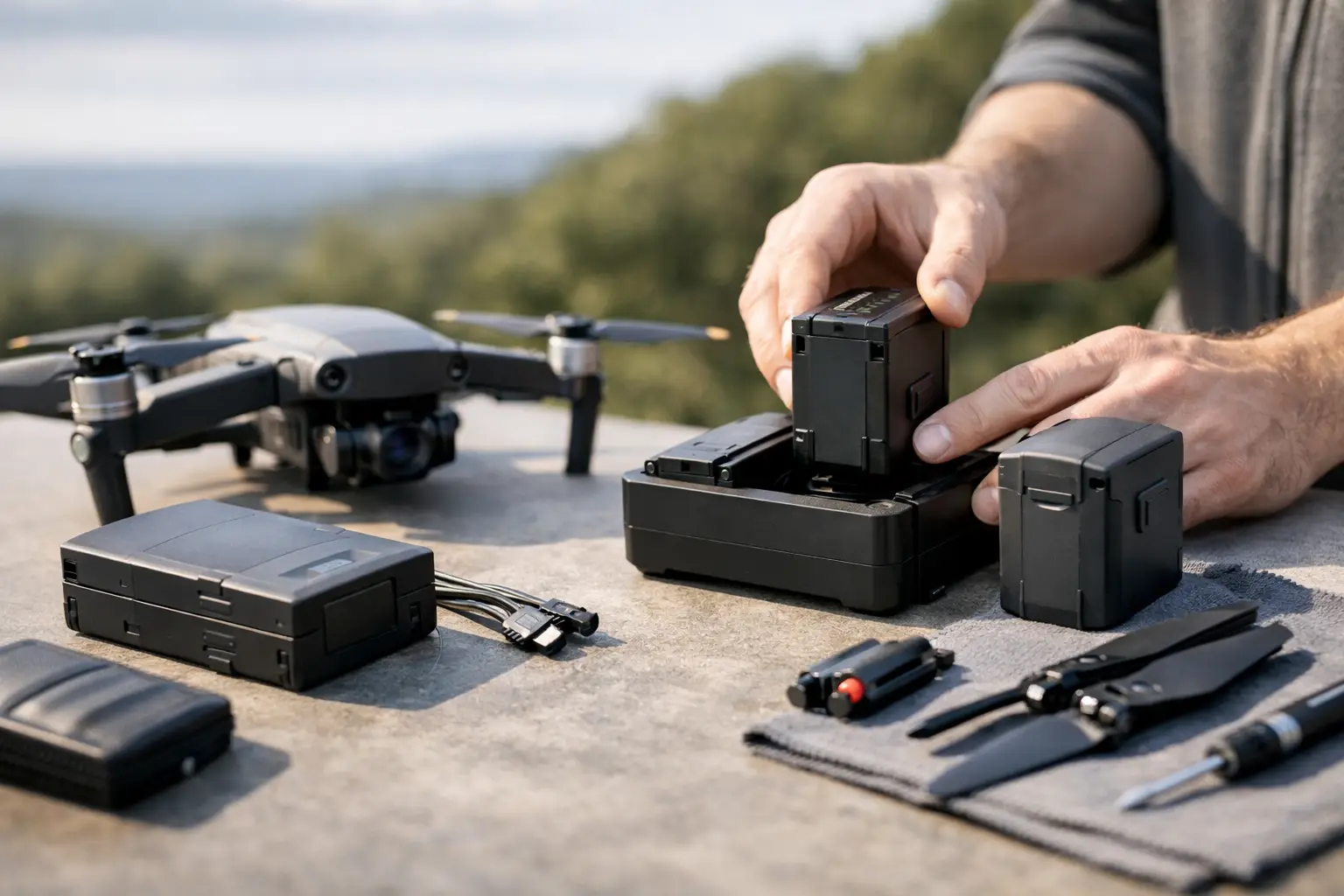
Our drone battery care guide explains charging, storage, transport and warning signs, helping UK pilots protect flight time and avoid battery damage.
A drone battery rarely fails without giving you a clue first. Shorter hover time, unexpected percentage drops, excess heat or a battery that will not sit flush in the aircraft all deserve attention. This drone battery care guide explains how to protect the component that has the greatest influence on every flight, from a quick content shoot to a professional inspection.
Modern intelligent flight batteries make ownership easier, but they are still lithium-based battery packs. They need sensible charging, correct storage and routine inspection. Treat them as consumables with a service life, not as accessories to leave in a case until the next outing.
Start with the right charging routine
Use the manufacturer-approved charging hub, charger and power supply designed for your aircraft and battery. It is tempting to use a spare USB adapter or an unfamiliar third-party lead when travelling, but inconsistent power delivery and poor-quality accessories can create avoidable risk. Official equipment is designed to communicate correctly with the battery management system.
Charge batteries on a hard, non-flammable surface in a dry, ventilated area. Keep them clear of direct sunlight, radiators, vehicles and anything that could block heat dissipation. A kitchen worktop or clear workbench is a better choice than a sofa, carpet or packed flight bag.
Let a battery cool down after flying before connecting it to a charger. Likewise, give it time to return to a sensible ambient temperature before take-off. Charging a warm pack immediately after landing is one of the simplest ways to add unnecessary stress over time. For a busy job, rotate batteries rather than rushing the same one back into service.
Avoid leaving batteries charging unattended or overnight. Intelligent batteries include protective systems, but those systems are not a reason to ignore basic precautions. Stay nearby, check that the pack and charger remain cool enough to handle normally, and disconnect the equipment once charging is complete.
Cold weather changes the plan
Cold conditions reduce available battery performance. For UK pilots, that matters for much of the year. A battery that appears healthy indoors may deliver less usable flight time on a frosty morning, particularly during the first minutes of a flight.
Keep batteries warm before use by carrying them in an insulated case or inside a pocket of your outer clothing, not against bare skin. Do not apply direct heat or leave them on a heater. Once installed, allow the aircraft to stabilise and watch for any battery temperature or power warnings in the flight app. Build in a larger landing margin than you would on a mild day.
Drone battery care guide: storage that protects capacity
The most common storage mistake is putting fully charged batteries away after a flying session and forgetting them for weeks. Lithium batteries do not benefit from sitting at maximum charge for long periods. Equally, storing a pack empty can allow it to discharge too far.
For longer storage, follow the battery manufacturer’s stated charge level and storage instructions. As a general rule, a partial charge is preferable to full or near-empty storage. Many intelligent flight batteries manage this by automatically discharging after a period, but that feature does not remove the need for regular checks.
Choose a cool, dry place away from direct sun and significant temperature swings. A locked car, conservatory, shed or loft can become far hotter or colder than expected. Store batteries separately from loose metal objects such as keys, tools and coins, and use terminal covers where supplied.
If you will not fly for several months, inspect each pack periodically. Check the displayed charge level, look for physical changes and bring the battery back to the recommended storage range if necessary. Label batteries with a number or purchase month if you operate several packs. This makes it easier to rotate use, identify a weak battery and keep accurate records for professional work.
Do not store batteries inside the aircraft
Removing the battery after a flight protects both the battery and the drone. It prevents accidental activation during transport, makes visual inspection easier and reduces the chance of moisture remaining trapped around the battery compartment. It also means a damaged or swollen pack is less likely to affect the aircraft itself.
Inspect before every flight
A 30-second battery check is worth far more than a rushed pre-flight launch. Examine the casing for cracks, dents, leaks, corrosion, scorch marks or swelling. Check that the contacts are clean, dry and undamaged. A battery should fit securely without force and should not move once installed.
Swelling is a clear stop sign. Do not squeeze a swollen battery back into shape, force it into the drone or continue charging it to see whether it recovers. Isolate it in a safe area away from combustible materials and arrange appropriate disposal or specialist advice.
Use the flight app or battery status display to review charge level and any health or cell warnings. A pack that reports abnormal voltage behaviour, has suffered a hard impact or repeatedly loses charge faster than comparable batteries should be removed from operational use. For professional teams, logging battery cycles, faults and incident history is good practice. It supports safer planning and makes replacement decisions based on evidence rather than guesswork.
Fly with a sensible reserve
Battery care is not only about what happens at the charger. Regularly draining packs to the point of forced landing creates a poor safety margin and can accelerate wear. Plan the return journey before launch, taking account of wind, payload, temperature and distance from the take-off point.
A headwind that was manageable on the outbound leg can consume far more power when returning. Content creators filming along a coastline, survey teams covering a large site and recreational pilots flying from elevated ground all need to account for this. The battery percentage is an estimate, not a guarantee of how long the aircraft can remain airborne in changing conditions.
Land early when the aircraft reports low battery, unexpected power loss or a battery warning. Do not continue a flight simply because the scene is nearly complete. A controlled landing protects the aircraft, battery and people around the operation.
Transport batteries as carefully as you store them
For travel by road, keep batteries in a protective case where they cannot move around, become wet or contact metal items. Do not leave them in a vehicle for prolonged periods, especially during hot weather or freezing conditions.
Air travel requires more preparation. Airlines set their own rules for spare lithium batteries, including limits based on battery capacity and requirements for carry-on baggage. Check the airline’s current policy before packing, protect terminals from short circuits and never assume that a battery accepted on one route will be handled the same way on another. If you are travelling for paid work, confirm the requirements before committing to the job.
Know when care becomes replacement
No flight battery lasts indefinitely. Capacity gradually declines with age, charge cycles, heavy use and exposure to heat. The right question is not whether a battery still turns on, but whether it remains predictable enough for the work you ask it to do.
Replace a battery if it is swollen, physically damaged, repeatedly reports errors, overheats, will not charge normally or delivers clearly inconsistent performance. Do not attempt to repair, open or modify a lithium flight battery. The apparent saving is not worth the fire risk or the loss of reliability in the air.
At end of life, do not put drone batteries in household waste. Use an appropriate battery recycling point or follow local recycling guidance. If a battery is damaged, seek advice from the manufacturer or a qualified drone service provider on safe handling before transport.
For pilots who rely on their aircraft for work, keeping a spare approved battery and reviewing battery condition as part of routine maintenance is a sensible operational cost. Drone-Sales can also help owners who need technical support, replacement equipment or a repair assessment after an incident.
Good battery habits are not complicated. Give each pack time to cool, charge it with the correct equipment, store it properly and act on early warning signs. That discipline turns a battery from a potential weak point into a dependable part of every flight plan.